
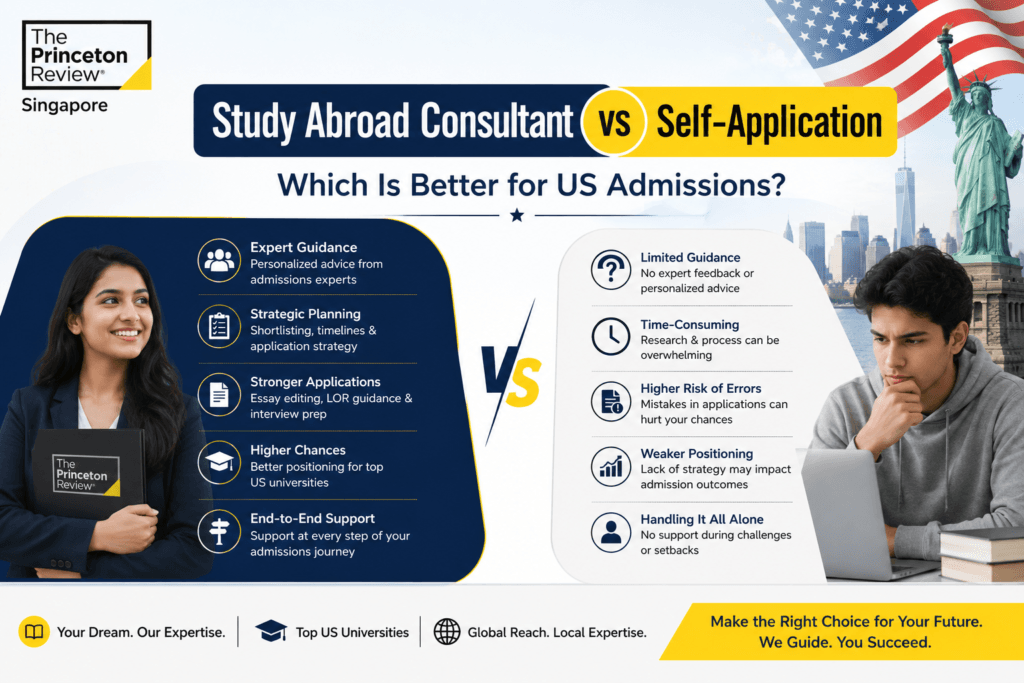
At some point in your US study abroad journey, someone will scare you.
They’ll say things like: “Without a consultant, you’ll mess up.” Or the opposite: “Consultants are useless. I got in on my own.”
Both statements sound confident. Neither tells the full story.
The truth slips away quietly and is a little bit uncomfortable: there isn’t a single “correct” way to apply to US universities. A method that yields great success for one student may turn out to be a failure for another one.
Let’s discuss the matter, without any overstatements, without any attempts to persuade.
Why This Question Even Exists
If US admissions were straightforward, nobody would be debating this.
But they aren’t.
You’re not just uploading marksheets. You’re expected to explain:
- Why did you choose a specific field
- How your past connects to your future
- What kind of student are you on campus
Since nothing is explained in a clear way, students naturally start wondering whether they need expert help or if they can manage it on their own.
What a Study Abroad Consultant Is (In Real Life)
A consultant, in theory, is the one who accompanies you every step of the way. As a matter of fact, different consultants happen to be very different from each other in character.
Some of them are really committed. They’ll make you rethink certain decisions and say it straight if your approach isn’t practical.
Others just work on full autopilot standard university lists, recycled essay formats, and advice that sounds impressive but, in reality, has no substance.
At Princeton Review, we’ve learned this from experience: good guidance helps you think clearly about your choices. Bad guidance thinks for you. The first approach prepares you for success. The second creates problems during visa interviews when you can’t explain your own decisions.
When a Consultant Actually Helps
A consultant can be useful if you’re genuinely stuck.
Not lazy. Not unwilling to research. Just overwhelmed.
Some students don’t know:
- How many universities should you apply to
- How competitive their profile really is
- How to structure a Statement of Purpose
- How early should they start
In those cases, having someone map things out can reduce confusion fast.
Consultants can also help students who:
- are working full-time
- are applying after a long academic gap
- have complex visa or financial situations
That structure can make the process feel manageable instead of chaotic.
Where Consultants Often Fall Short
Here’s the part that students usually realize too late.
Many consultants aim for safe outcomes, not strong ones. They avoid risk. They prefer predictable applications. Which means:
- essays that sound correct but forgettable
- university lists that look “reasonable” but uninspired
- advice that discourages originality
US admissions don’t reward safe storytelling. They reward clear thinking.
Another issue? When someone else drives the process, students stop thinking critically. Then, during visa interviews or university interactions, they struggle to explain their own choices.
That’s a red flag.
What Self-Application Really Demands
Self-application isn’t brave. It’s demanding. You’ll spend hours reading university pages that don’t give direct answers. You’ll second-guess your essays. You’ll wonder if you’re aiming too high—or too low.
But something important happens when students apply on their own. They start understanding why they’re applying.
They don’t just say, “This university is good.” They say, “This program fits what I’ve done so far.”
That difference shows up clearly in applications.
Why Self-Applicants Often Sound More Convincing
It’s not because they write better English. It’s because they write with ownership. Admissions officers aren’t grading grammar. They’re trying to understand:
- how you think
- How do you make decisions
- whether you’ll actually thrive in their system
Applications written entirely by students tend to feel more grounded—even when imperfect.
And yes, self-application saves money. But the bigger benefit is confidence. Students who manage this process themselves usually adapt faster once they reach the US.
The Real Risks of Doing It Alone
Let’s be honest—self-application isn’t romantic.
You can miss details. You can misjudge competitiveness. You can submit an essay that means something to you, but doesn’t communicate clearly.
Common mistakes self-applicants make:
- Missing deadlines or application requirements
- Choosing universities without understanding real competitiveness
- Writing essays that are personal but unclear to readers
- Skipping important steps like financial planning
Without feedback, blind spots grow.
That’s why students who succeed on their own rarely do it in isolation. They talk to seniors. They ask alumni. They show drafts to people who will be honest, not polite.
How to Know Which Path Fits You
Ask yourself these questions:
Consider getting guidance if you:
- Feel completely lost about where to start
- Don’t have access to seniors or alumni
- Are you managing work or other major commitments
- Need help understanding your real chances
Try self-application if you:
- Enjoy research and planning
- Have access to good information sources
- Feel confident managing timelines
- Want full control over your narrative
If you’re still unsure, there’s a third option.
The Choice Most Students Should Actually Make
Here’s the part no one markets. You don’t need to choose sides.
Many strong applicants:
- research universities themselves
- write their own essays
- Use paid help only for review, not creation
- Prepare for visas with mock interviews, not scripts
That is the way Princeton Review interacts with students. We do not compose your essays for you; rather, we assist you in discovering what is important to say. We don’t choose universities on your behalf; we help you understand which ones actually suit your profile. The point of the whole exercise is not to have a “perfect” application, but one that reflects you while at the same time not containing errors that will make your chances worse.
Think guidance, not dependency.
So, Which One Is Better?
If you want a clear answer, here it is:
If you need direction and structure, good guidance helps.
If you value control and authenticity, self-application works extremely well.
If you hand over your story entirely—either way—you weaken your application.
Admissions in USA aren’t about who helped you. They’re about whether you understand your own journey.
One Last Thought
No consultant can compensate for a student who doesn’t reflect. No application works without real effort and honest thinking. Go with what makes you reflect on your application, not what only feels comfortable in the moment. These are the admissions committees that notice that clarity. Use of a professional helper or not, your application should be your thinking, not someone else’s pattern.